 Sign in


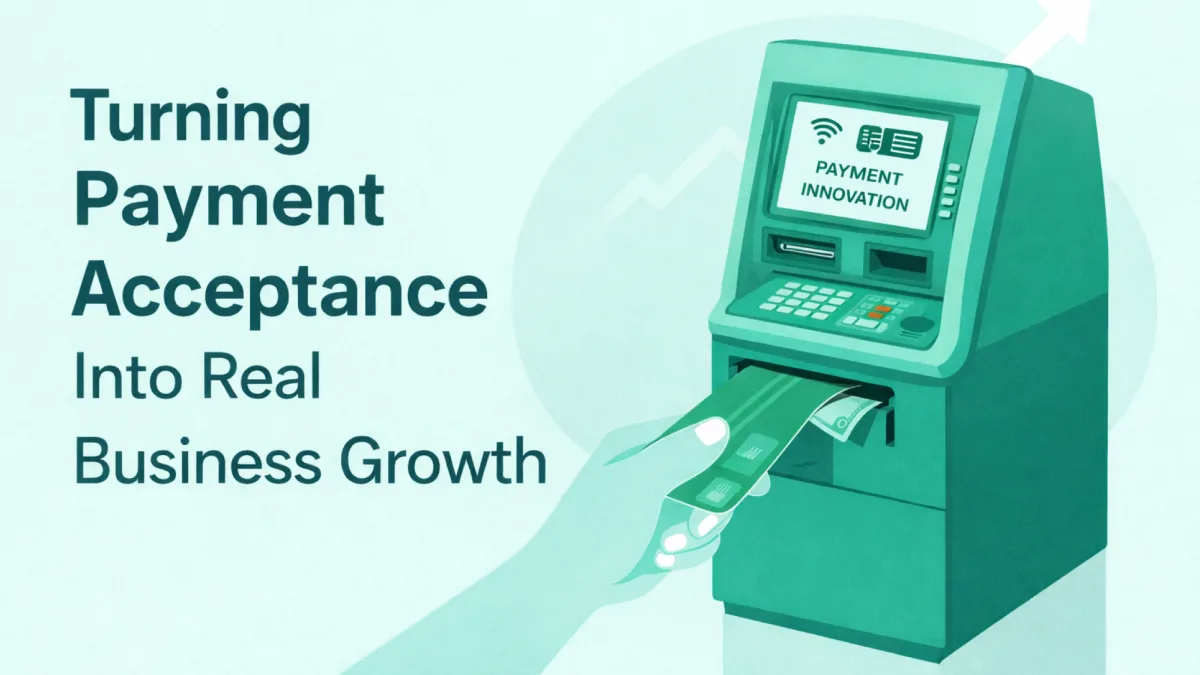
For many businesses, payments are still viewed as a simple operational necessity — a system that allows customers to complete transactions. But in today’s fast-moving digital economy, payment infrastructure has evolved into something far more powerful. When optimized correctly, payments can directly influence customer experience, approval rates, revenue stability, and long-term scalability.
Businesses that treat payment acceptance as a strategic growth tool — rather than just a processing function — are discovering new opportunities to increase conversions, reduce risk, and expand into new markets with confidence.
Payments Are No Longer Just Transactions
Modern customers expect speed, flexibility, and security when making purchases. Whether paying online, in-store, through subscriptions, or via mobile devices, the checkout experience plays a critical role in determining whether a sale is completed or abandoned. Even small friction points — slow approvals, limited payment options, or unnecessary authentication steps — can reduce conversion rates significantly.
By implementing advanced payment solutions such as multi-gateway routing, digital wallet acceptance, ACH payments, and recurring billing systems, businesses create smoother purchasing journeys that improve customer satisfaction while increasing revenue consistency.
Improving Approval Rates Means Immediate Revenue Impact
One of the most overlooked growth drivers is transaction approval optimization. Payment failures don’t always mean a customer lacks funds; many declines occur due to routing inefficiencies, bank mismatches, or outdated processing configurations. Intelligent payment routing and optimized gateway setups can significantly increase approval rates, ensuring that legitimate transactions are successfully processed the first time.
Even a small improvement in approval percentages can translate into substantial revenue gains over time, especially for businesses processing high transaction volumes.
Expanding Payment Options Expands Market Reach
Customers today prefer different payment methods depending on geography, purchasing habits, and financial preferences. Some prefer cards, others rely on ACH or bank transfers, while many younger consumers favor digital wallets or subscription-based billing models. Offering a broader range of payment acceptance methods allows businesses to serve a wider audience without adding operational complexity.
Flexible payment ecosystems also enable companies to expand internationally, support new verticals, and enter high-growth industries that require specialized processing capabilities.
Payment Security Builds Customer Confidence
Trust remains one of the strongest drivers of long-term customer retention. Secure payment environments equipped with multi-layer encryption, fraud monitoring, and compliance-ready infrastructure help businesses protect sensitive data while minimizing chargebacks and fraud exposure. Customers are far more likely to complete purchases and return for repeat transactions when they feel confident their financial information is protected.
Modern payment platforms combine security, compliance, and monitoring tools into a unified system, allowing businesses to maintain strong protection without slowing down the checkout process.
Automation Creates Operational Efficiency
Payment innovation also reduces internal workload. Automated invoicing, recurring billing, reconciliation systems, and integrated reporting tools eliminate many manual financial processes that previously required dedicated administrative effort. With streamlined payment operations, teams can focus more on sales growth, customer engagement, and strategic planning rather than routine processing tasks.
Automation not only saves time but also improves accuracy, helping businesses maintain cleaner financial records and faster settlement cycles.
Payments as a Strategic Growth Engine
Companies that approach payments strategically begin to see them as more than infrastructure — they become a performance lever that supports marketing, retention, expansion, and financial stability. Faster approvals, broader acceptance capabilities, improved customer experience, and reduced operational friction collectively create a stronger foundation for scaling.
As commerce continues to evolve, businesses that modernize their payment systems today position themselves to adapt faster tomorrow. Payment innovation is no longer optional; it is a core component of sustainable growth.
Conclusion
Accepting payments is only the starting point. Real growth begins when businesses optimize how payments are processed, secured, and integrated into the overall customer journey. By adopting smarter payment solutions, organizations can increase approvals, enhance customer trust, expand their reach, and build the operational efficiency needed to scale confidently in an increasingly competitive marketplace.